Finding the right Intelligent Document Processing (IDP) software can be tricky with so many options out there. After months of testing and comparing the top tools of 2026, we’ve rounded up the 10 best platforms that truly stand out for their accuracy, ease of use, and overall value.
1. Lido
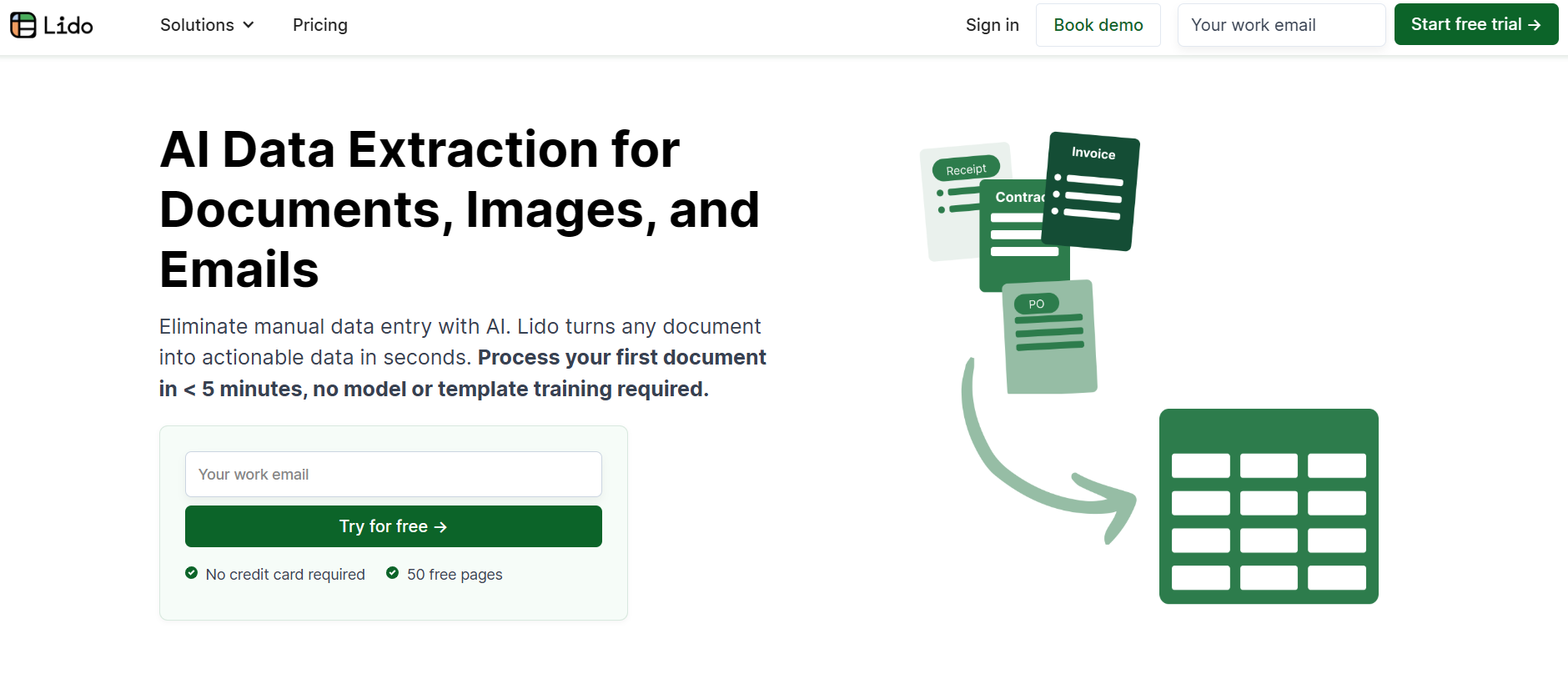
If you’re searching for an Intelligent Document Processing (IDP) tool that’s both powerful and easy to use, Lido is a great place to start. It helps teams quickly extract and organize data from PDFs, invoices, and other business documents without templates or coding. Setup takes only a few minutes, so you can start automating right away.
Key Features
AI-powered data extraction from PDFs, scans, and emails
Exports directly to Excel, CSV, or your accounting system
Free tier available for light use
Paid plans starting around $19 per month for higher volumes
Pros
Simple and intuitive interface
Free plan lets you test before committing
Clear, upfront pricing with no hidden fees
Cons
No mobile app available
Advanced automation tools can be expensive for smaller teams
Pricing
Standard Plan: $29 per month for 1 user and up to 100 pages
Scale Plan: $3,950 per year for 10 users, 42,000 pages, and API access
Enterprise Plan: From $20,000 per year with unlimited pages and ERP integrations
2. IDPSoftware.co
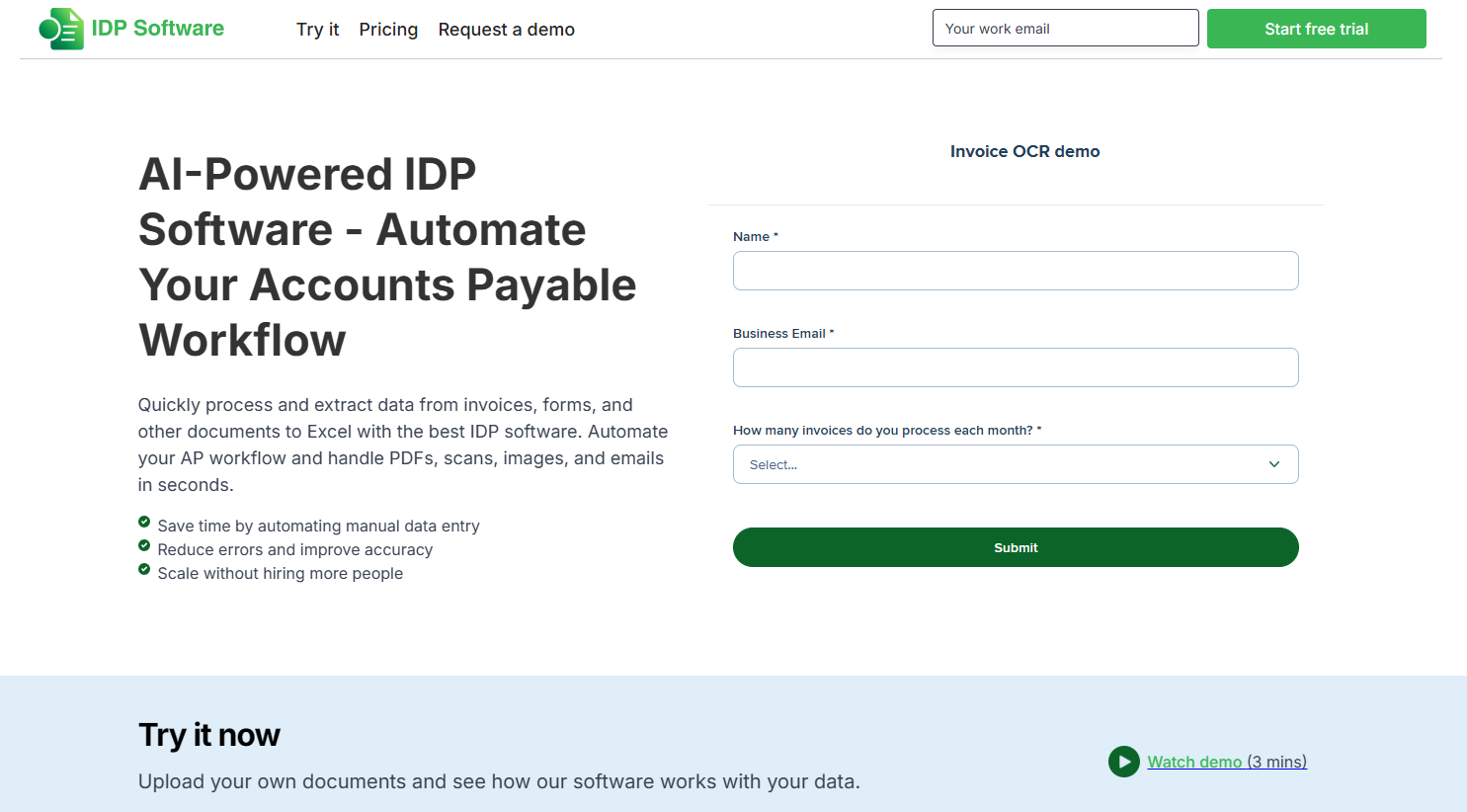
IDPSoftware.co is built for teams that need fast, accurate, and reliable document automation at scale. Its AI engine handles large batches of PDFs, invoices, and scanned files without templates, while integrating smoothly with everyday tools like Google Drive and Excel. The setup is quick, and the pricing is clear so you always know what to expect.
Key Features
Template-free AI for invoices and document extraction
Imports from email or Google Drive, exports to Excel, Sheets, or CSV
AES-256 encryption with strong privacy and compliance standards
Pros
Clear, tiered pricing that’s easy to understand
Strong automation with minimal manual input
Flexible import and export integrations
Cons
Costs can increase for very high document volumes
Some advanced enterprise options require custom plans
Pricing
Standard: $29/month - 1 user and 100 pages
Scale: $3,950/year - 10 users, 42,000 pages, and API access
Enterprise: Starts at $20,000 per year with unlimited pages and ERP integrations
3. InvoiceOCR.co
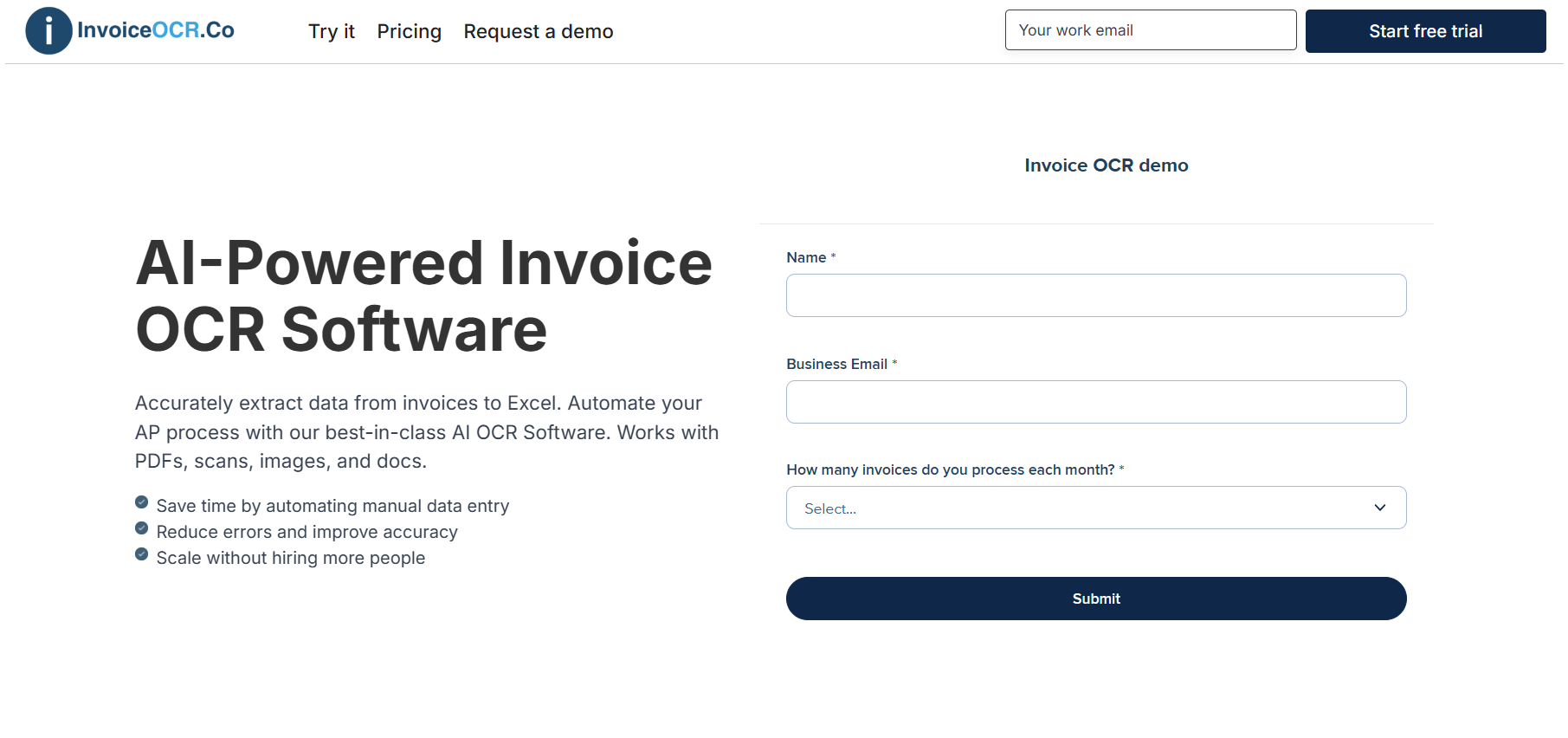
InvoiceOCR.co is an all-in-one Intelligent Document Processing (IDP) platform designed to automate data capture from invoices, receipts, financial statements, and other business documents. Instead of manually entering details, users can upload files and get structured, ready-to-use data within seconds. The system’s AI intelligently understands different document layouts, eliminating the need for templates or setup.
Key Features
Handles PDFs, images, scans, and email attachments
Template-free AI that learns different formats automatically
Extracts vendor names, dates, totals, and line items
Built-in validation for accuracy and consistency
Seamless export to spreadsheets, APIs, or accounting software
Pros
Easy to set up and use with no technical background required
Highly accurate across multiple document types
Works for both invoices and general business documents
Fast export and integration options
Cons
Advanced API and workflow features limited to upper-tier plans
No mobile version yet
Pricing
Starter Plan: $29 per month for 1 user with up to 100 pages
Business Plan: $3,950 per year for teams of 10 users, 42,000 pages, and API capabilities
Enterprise Plan: Custom packages starting at $20,000 per year with unlimited usage and full ERP integration
4. UiPath
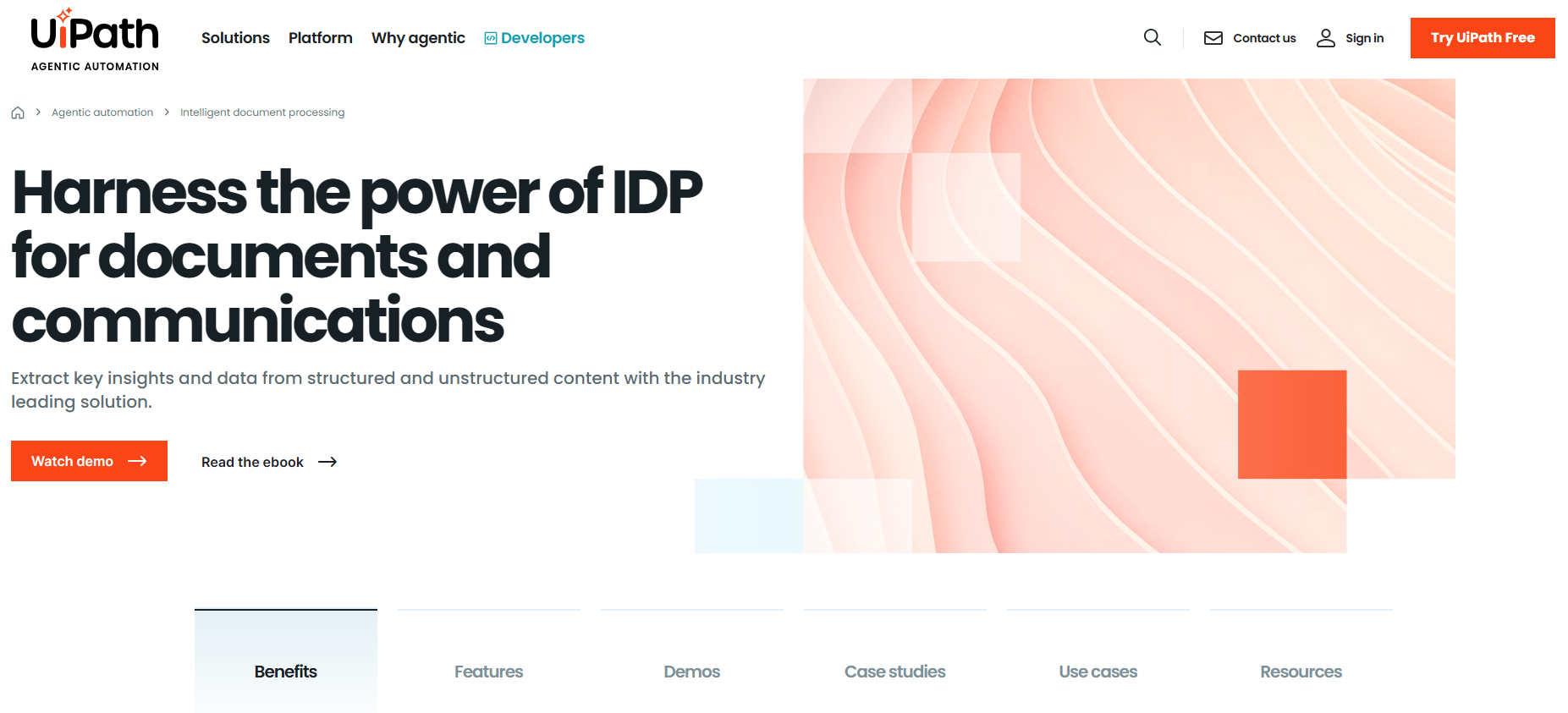
UiPath remains one of the most advanced Intelligent Document Processing (IDP) platforms in 2026. Built on its strong foundation in AI and automation, UiPath is designed for large organizations that need enterprise-grade accuracy, scalability, and flexibility. Its proprietary language models and prebuilt workflows make it a go-to choice for businesses processing complex, unstructured documents.
Key Features
Proprietary LLMs: DocPath for document extraction and CommPath for communication understanding
Generative extraction and zero-shot learning for unstructured or unseen document types
Over 120 prebuilt use cases and comprehensive enterprise analytics
Pros
Consistently ranked a market leader by analysts such as Everest Group, IDC, and Forrester
Regular AI-driven updates and innovations
Excellent enterprise support and strong customer satisfaction ratings
Cons
Pricing details are not publicly disclosed
Primarily suited for large-scale enterprise contracts
Steeper learning curve compared to simpler IDP tools
Pricing
Custom enterprise pricing available upon request
5. Rossum
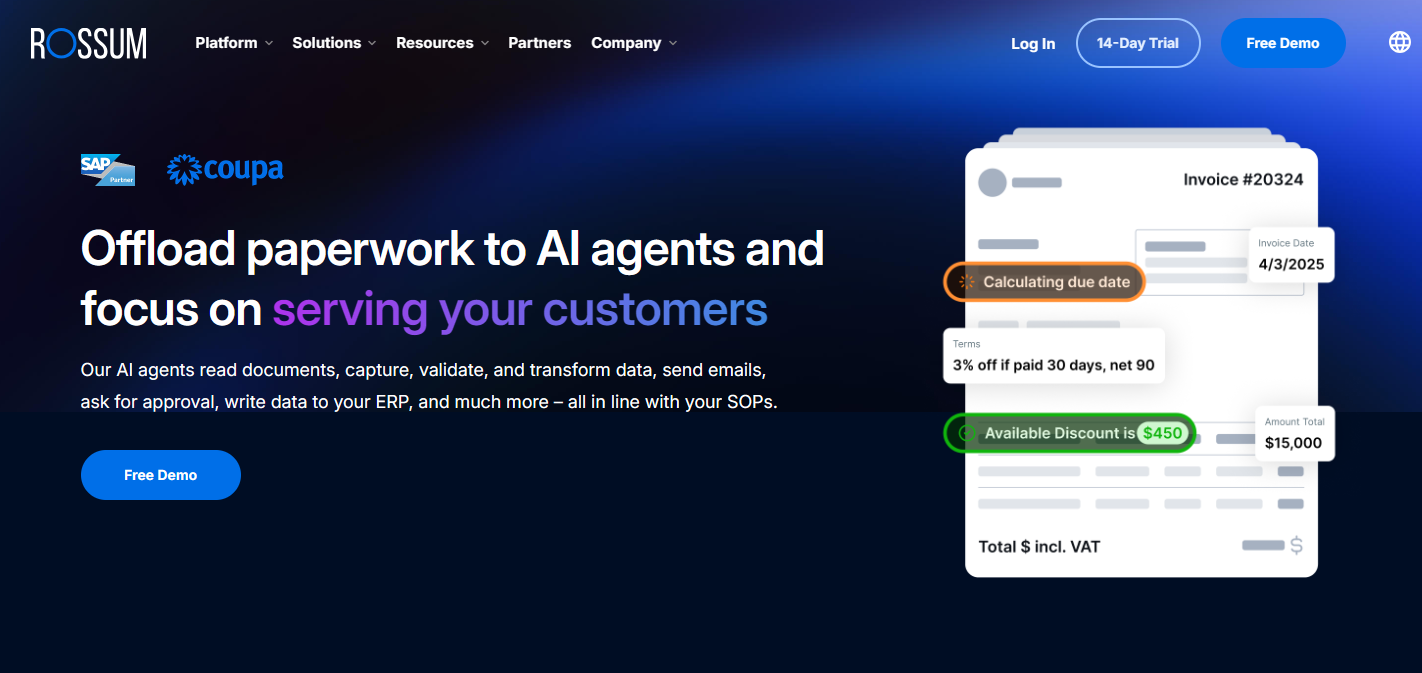
Rossum uses AI to extract data from documents without templates or manual setup. It automatically recognizes the structure of invoices, purchase orders, and contracts, making it a great fit for teams that process high volumes of varied documents and want consistent accuracy.
Key Features
AI-powered extraction for invoices, POs, and contracts
Cloud-based document capture and processing
Integrates with ERPs and workflow tools
Human-in-the-loop option for added precision
Pros
Accurate across different document types
Removes the need for template setup
Scales well for enterprise use
Cons
Higher cost than lighter tools
Setup and onboarding can take time
Pricing
Starts at around $18,000 per year for base plans
Custom enterprise options available for larger volumes
6. ABBYY FineReader / FlexiCapture
ABBYY is a trusted name in intelligent document processing. FineReader PDF is ideal for individuals or small teams that need accurate document conversion, while FlexiCapture powers large-scale automation for enterprises handling thousands of documents daily. Together, they offer a full range of AI-driven tools for data extraction, classification, and validation.
Key Features
Highly accurate text recognition and layout preservation
Advanced data extraction and validation for structured and unstructured documents
Integrations with ERP, RPA, and compliance platforms
Pros
Excellent accuracy and reliability across multiple document types
Scalable options for both small teams and enterprise users
Cons
Interface can feel overwhelming for beginners
FlexiCapture pricing can be steep for smaller businesses
Pricing
FineReader: Starts at $99 per year (Standard), $165 per year (Corporate), or $69 per year (Mac)
FlexiCapture: Enterprise plans start around $4,150 and can range up to $12,000–$40,000+ depending on volume and features
7. IBM Automation Document Processing
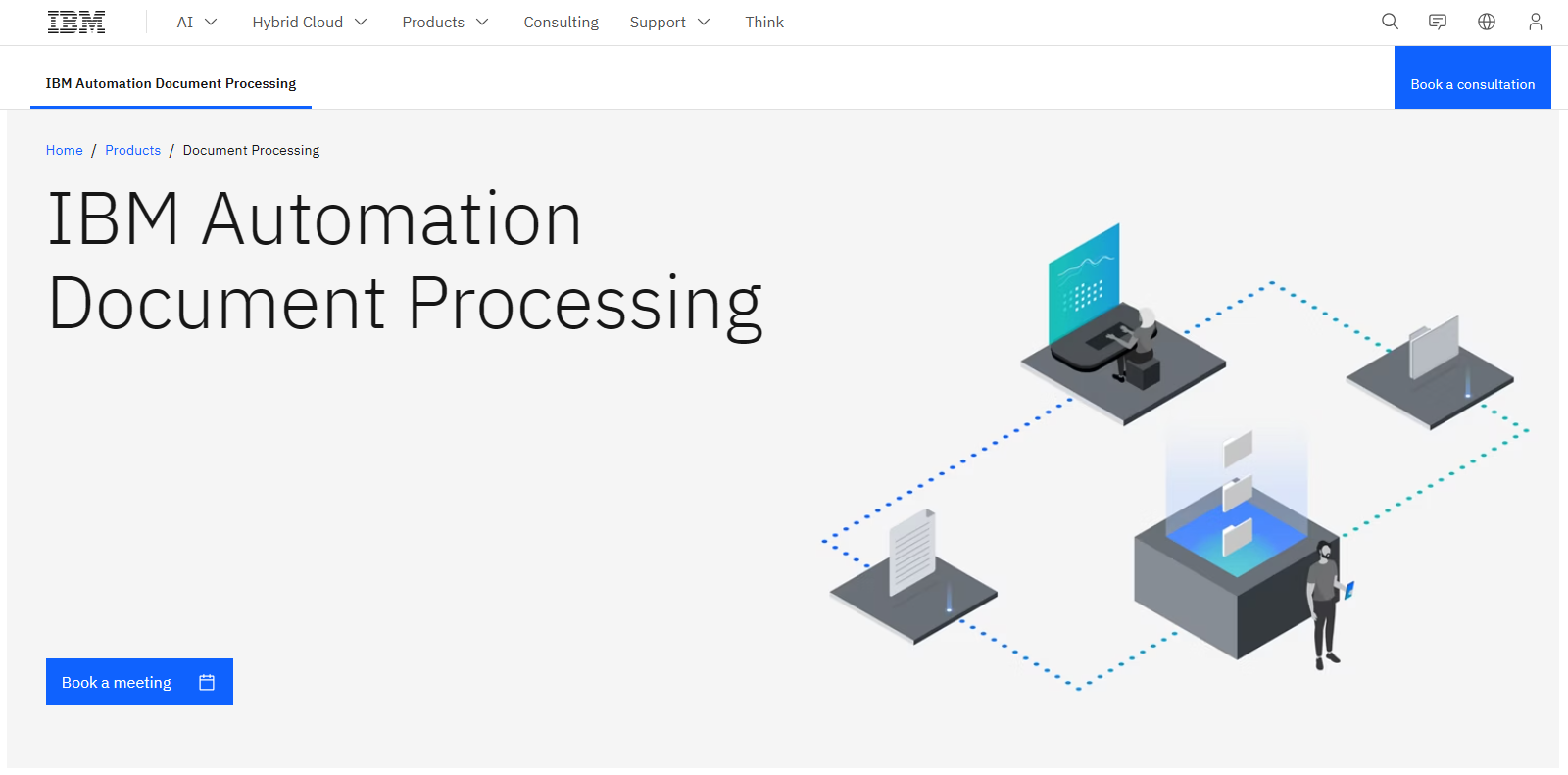
IBM Automation Document Processing combines AI and machine learning to classify and extract data from a wide range of document types. It’s best suited for organizations already using IBM’s automation ecosystem and looking to extend their capabilities into document processing.
Key Features
Prebuilt AI models for invoices, contracts, and receipts
Intelligent classification and data extraction for structured and unstructured files
Seamless integration with IBM’s wider automation and analytics tools
Pros
Backed by IBM’s strong enterprise reputation and global support
Flexible enough to handle multiple document categories
Cons
Requires technical knowledge or in-house IT support for implementation
Interface and configuration may feel complex for first-time users
Pricing
Quote-based
Uses a modular, consumption-based pricing model so you only pay for what you use
8. Tungsten Automation (formerly Kofax)
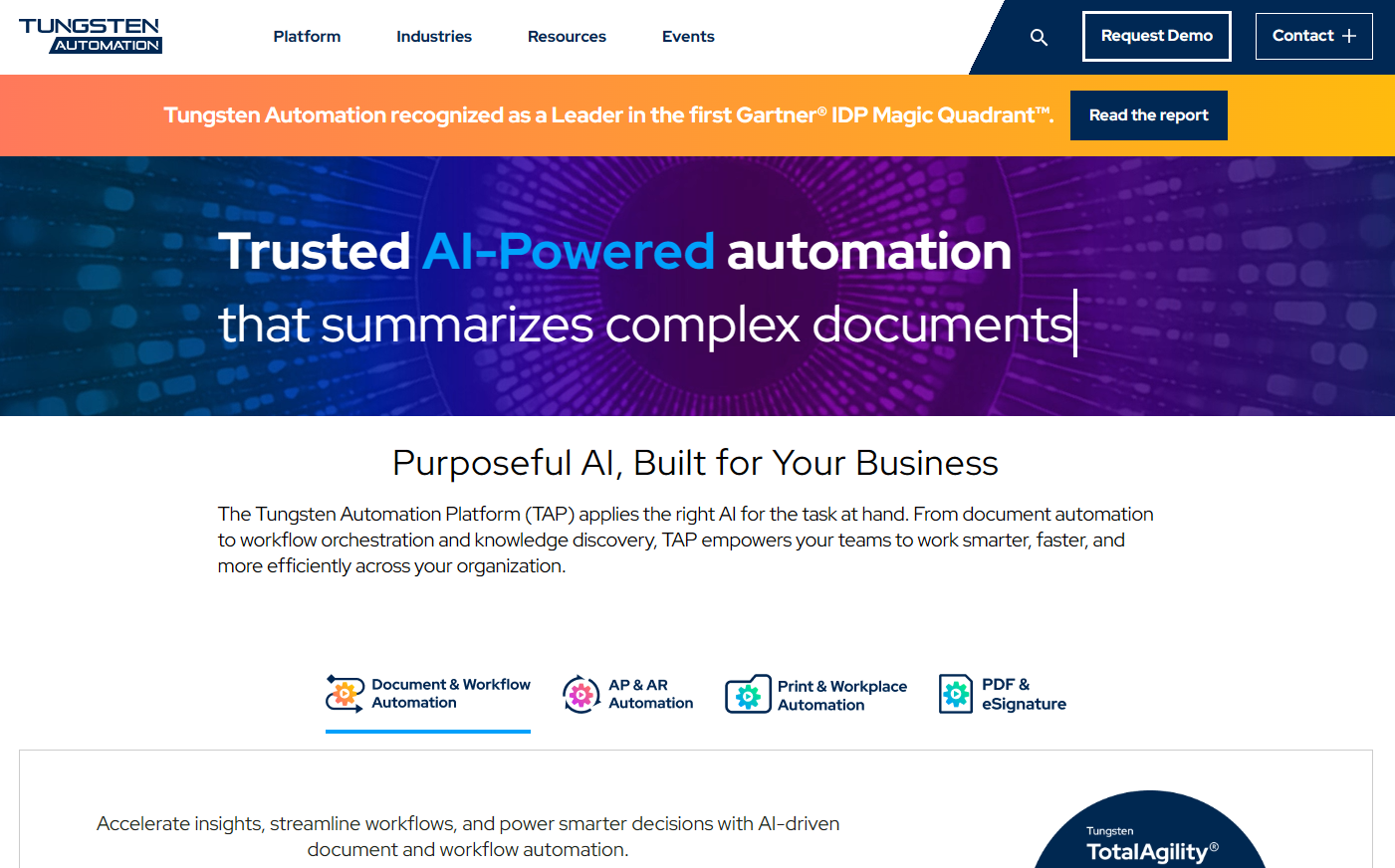
Previously known as Kofax, Tungsten Automation has long been a trusted name in document and process automation. It’s built for large organizations that need advanced tools to capture, classify, and manage complex document workflows. With AI-powered capture and seamless RPA integration, it helps teams automate end-to-end processes at scale.
Key Features
Intelligent document capture with built-in RPA capabilities
Workflow orchestration and process automation tools
Designed to handle high-volume enterprise operations
Pros
Backed by decades of experience and a strong global presence
Reliable choice for large enterprises with complex workflows
Cons
Takes time to learn and fully implement
Best suited for teams with existing automation experience
Pricing
Custom enterprise pricing available upon request
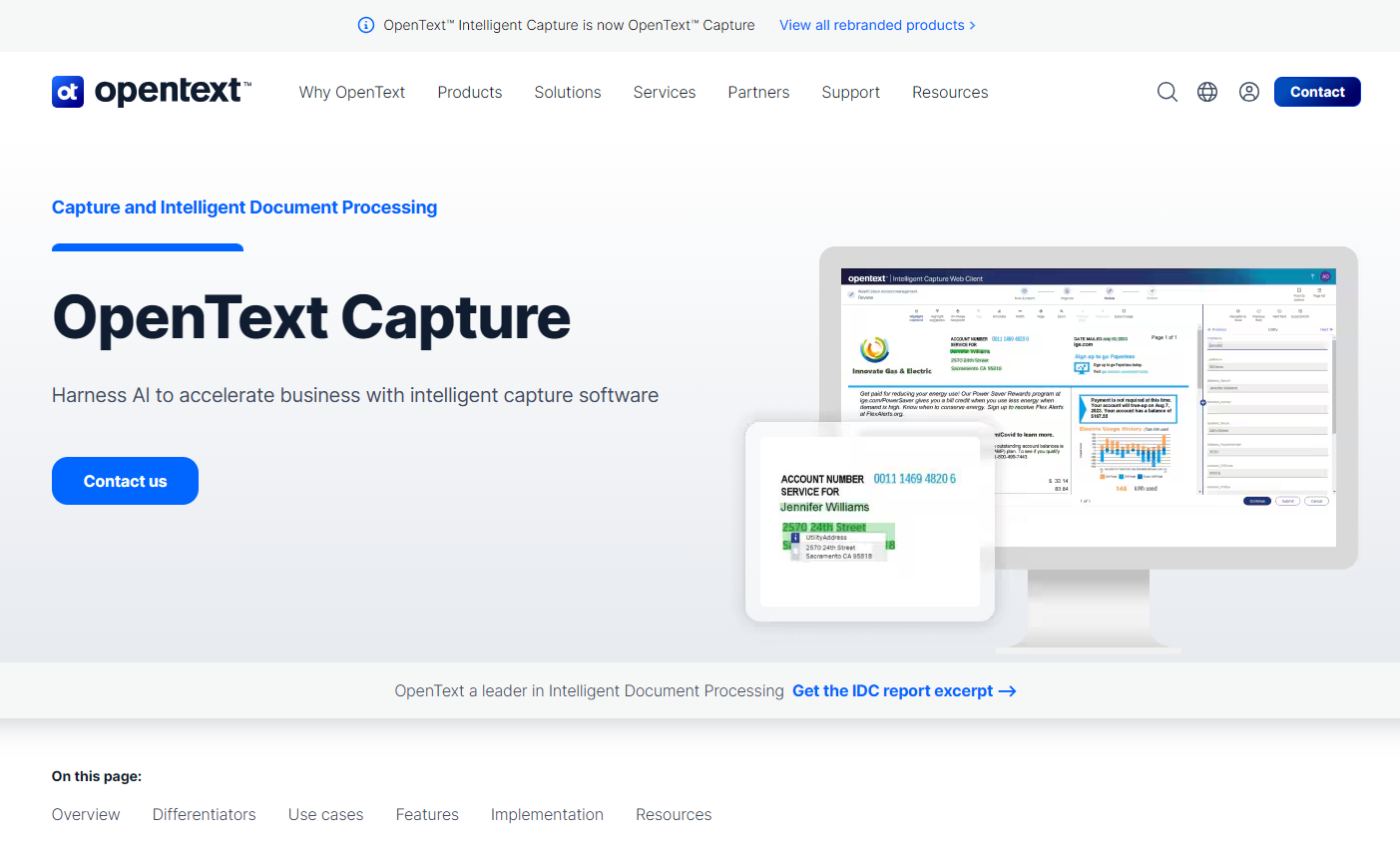
9. OpenText
OpenText brings intelligent document processing right into its enterprise content management (ECM) and business process management (BPM) systems. It’s built for organizations that deal with strict compliance and governance requirements, such as those in finance, healthcare, and government. With deep integration and powerful automation tools, OpenText helps large teams manage, process, and secure documents at scale.
Key Features
Built-in document capture and AI-powered data extraction
Advanced compliance, audit, and governance controls
Scalable infrastructure for high-volume enterprise use
Pros
Excellent fit for industries with heavy regulatory requirements
Highly customizable and integrates smoothly with enterprise systems
Cons
Implementation can be time-consuming and complex
May feel overly advanced for smaller teams or simpler workflows
Pricing
Pricing is quote-based and varies by deployment size and configuration
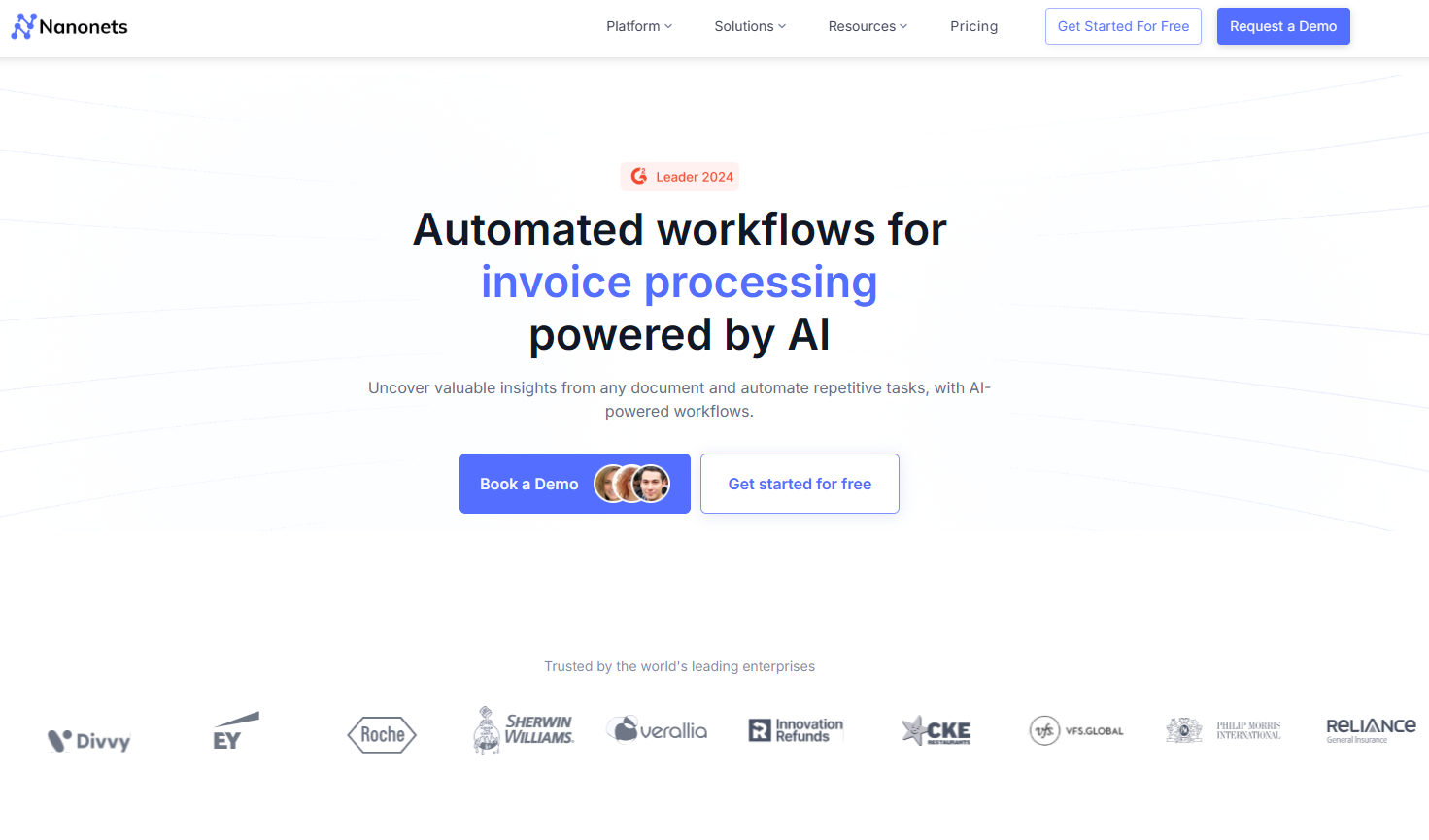
10. Nanonets
Nanonets is a flexible and easy-to-use Intelligent Document Processing platform designed for teams that want automation without needing a large IT setup. It can extract and organize data from invoices, receipts, forms, and other business documents in just a few clicks.
Key Features
No-code AI that captures data from PDFs, images, and email attachments
Usage-based pricing that lets you pay only for what you process
Exports structured data to Excel, CSV, or connected business systems
Pros
Simple and beginner-friendly setup
Works well for both small teams and growing businesses
Transparent pricing that scales with usage
Cons
May not offer the same depth as heavy-duty enterprise IDP tools
Integrations with older or legacy systems may require extra setup
Pricing
Starter plans begin at around $0.30 per page under a usage-based model
Free trial available, with paid plans scaling based on document volume
Start today with 50 free pages
👋 Let's personalize your experience!
Oops! Something went wrong while submitting the form.
Lido doesn't work on mobile yet, but we'll send you an email with your login details for when you're back at a desktop!
Oops! Something went wrong while submitting the form.